
ProQuest
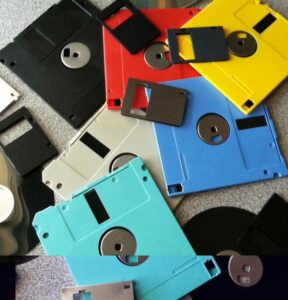
When I think of ProQuest, even though I know better, I imagine a cheesy text-based adventure video game from the 1990s that would be played on floppy discs. It just has one of those titles, you know? Well, the real answer is either much more exciting or much less exciting, depending on the type of person you are.
ProQuest is an online database for scholarly journals, books, videos, audio, dissertations, theses, and many other types of sources including smaller sub-databases. While they don’t include much about their digitization process, they have an extensive digital catalog, including collections from the Royal Archives, Associated Press, and National Association for the Advancement of Colored People.
One of the Sub-Databases within ProQuest is the Early Modern Books Database, which is a collaboration or sharing of materials with Early English Books online (Commonly referred to as EEBO). This database only includes primary sources, with an impressive time range of 1496-1787, though most sources are between 1590 and 1710. The majority of these sources seem to be digitized from the collections of the British Library, Huntington Library, Bodleian Library, Burke Library, Cambridge, and a few other archives. Almost all sources are from Western Europe, specifically England, but a few other countries are also represented. Most records seem to have no full text search capabilities, but there are a few outliers that are fully transcribed and can be full text searched. Almost all sources can also be downloaded as a full-text PDF.
By examining a few sources available on the database, it appears that the primary means of digitization are either hand photographed or scanned using a scanner. While it does not say outright, with the age of the sources, I’m more inclined to believe that the files are created out of multiple photographs turned into a PDF. It would also account for the slightly skewed angles of the documents on the digital pages.
An online review of the Database on Folgerpedia shows some of the flaws of the database: EEBO and the ProQuest databases like to inflate how impressive the database is. Now it’s an impressive database, but it does not nearly include all books from the Early Modern period, let alone all extant materials just from Early Modern England. Think of every single piece of paper you have ever seen in your life: you don’t just have those still. Sometimes a piece of paper gets a coffee ring on it so it’s thrown out, a notebook caught in the rain, all of the newspapers you’ve ever used for crafts and paper mache, what about paper you’ve burned to get a fire going in the fire place. Those documents don’t exist anymore, at least not in any usable condition. What about that library book that you left on the bus and could never find again? It may have made its way back to the library, but it may have ended up destroyed too. It’s practically a law in history that the sources you have are only a fraction of those that used to exist.
Folgerpedia also says that there are mistakes. When you’re digitizing thousands of sources a year, a few mistakes are bound to be made, sometimes the mistakes are as small as not including all useful tags, or as bad as completely writing the wrong title on a document. There’s also omissions, some pieces, namely pirated and works in private or protected collections, are often not included.
Now we get into the uncomfortable information: ProQuest is not free. Or is it? While it appears in the past there was options for individual licensing in the range of three-hundred dollars a year, it’s hard to find anything about individual licensing now. They recommended that you utilize an institutional license, for instance I can access the complete database using my GMU login, but many local public libraries also have licenses so you can log in using a public library card. In addition, even though I can’t find information about individual licenses there’s sources that are completely open source and can be viewed for free regardless. Not just that, but even not open source records can still be viewed as a sample of the full document.
When it comes to citations, ProQuest does not just show who cited each document, but there’s also a nifty tool that allows you to create your own citation for the source with little effort. Simply click the “Cite” button in the top right corner, click the drop down menu and find the method you like (I typically choose Chicago Notes-Bib, 15th), and copy the generated citation. If you use a citation keeper (I use EndNote), there’s extensions for RefWorks, EndNote, Citavi, Mendeley, NoodleTools, EasyBib, and Microsoft Excel Formats. Now that’s pretty much every citation keeper software that I’ve heard of and even a few more, so I think you’ll be set for your citation methods.
Now it might not be as exciting as a text-based adventure, but it’s definitely a database to keep in your arsenal for a rainy day.
(Last Updated 9/22/2022)
