
Magic: The Gathering, The First Collectible Card Game
Do you want to play cards? Depending on many factors and context, this question can point to various types of cards. Poker, Hearts Spades, Pinochle, Bridge, Old Maid, Go Fish, Uno, Phase Ten. Maybe some people would consider traditional trading cards like baseball cards playable, though trading is less of a game that the word “play” would imply. But I’m sure to a certain audience (likely the audience who would want to read this exhibit), you think of collectible card games (CCGs, also known as trading card games or TCGs): Pokemon, Yugiyoh, maybe the digital types Hearthstone or Legends of Runeterra, and so many more. Within this niche of CCGs, and even digital card games, is the classic Magic: The Gathering (MTG).
MTG is the oldest known CCG, released in 1993, to the fledgling company Wizards of the Coast (WOTC), only formed three years earlier (“The Creation of Magic”). MTG was developed in response to the creator, Richard Garfield’s inability to secure a board game developed by WOTC. Originally Garfield intended to develop a board game, Robo Rally, to be published by WOTC, but Peter Adkison and James Hays, the owners of the company, were unable to develop such a complex game so early into their company’s lifespan. Instead, Adkison and Hays agreed to work with Garfield if he could develop “a game that could be played quickly with minimal equipment, a game that would go over well at conventions.” This game became MTG (“The Creation of Magic”).
One of the earliest innovations of MTG, besides being a CCG generally, was the introduction of card colors. In a standard playing card deck, there are four suits, two colors, but the cards do not inherently have different abilities depending on what suit they are unless you’re playing a suit specific game, like Hearts or Spades. Garfield wanted the cards to have unique abilities, so he implemented a system in which colors have certain specializations that appeal to different players. Each deck can have up to two colors to increase the customization and re-playability possible for the player.
Blue magic now retains its counterspell capability, but is very creature poor, and lacks a good way to do direct damage. Red magic has little defense, particularly in the air, but has amazing direct damage and destruction capability. Green magic has an abundance of creatures and mana, but not much more. Black is the master of anticreature magic and has some flexibility, but is poorly suited to stopping noncreature threats. White magic is the magic of protection, and the only magic with common banding, but has little damage-dealing capability (“The Creation of Magic”).
With this new color system, players were encouraged to experiment with different color combinations to compliment the strengths or correct the weaknesses of their primary color. In addition, this experimentation also encouraged the purchase or trade of more cards as a source of financial resilience for the game, as players wanted more card options to test with their decks (“The Creation of Magic”).
In addition to the creativity afforded by the implementation of card colors, MTG is also built on a multiverse. Multiverses are a concept in fictional media that means multiple versions of the same world exist, sometimes with different features or on different timelines. A multiverse was implemented in MTG to prevent the cards from feeling as there was no storytelling cohesion. In addition, it was also beneficial for the development team, as it allowed multiple designers to seamlessly create cards and stories without fear of contradicting the work of another designer (“The Creation of Magic”). Another benefit of this mode of design was that it allowed WOTC to release novels depicting many of these worlds, including the New York Times Bestseller, War of the Spark: Ravnica (“After Nearly 30 Years, the Game Magic”).
Garfield insinuates that the introduction of the multiverse makes MTG more similar to a traditional role-playing game (RPG) than any other CCG on the market (as of his 2013 interview). Though he admits that the RPG aspect of the cards comes from the decks, rather than the role-playing of the players themselves. That decks have their own personalities based on their individual win-conditions, and including names given by the deck’s owner, it comes to life during play. With this, Garfield gives an example of a deck he created titled “Snow White and the Seven Dwarves,” containing a Wurm, mammoths, and a Veteran Bodyguard (“The Creation of Magic”).
Eventually, with these unique ideas of game building, WOTC was able to release the game to an eager and frenzied audience. “The demand for Magic the Gathering [sic] decks was so high that WOTC were not able to print enough copies...the 1990s can be called the decade of CCGs”(“Collectible Card Games - How This Old Concept Still Shapes The Gaming World”). Indeed, some of the most popular CCGs got their start in the ‘90s: Pokemon was released in Japan in 1996, then in the West by WOTC in 1998, (“Pokémon Trading Card Game”) as well as Yu-Gi-Oh! being released in Japan in 1996 and 2002 in the West (“Konami Digital Entertainment, Inc. to Take Control of the Yu-Gi-Oh! TRADING CARD GAME). Following the successful launch and subsequent expansions, Garfield is reported to have left WOTC in 2000, following the purchase of WOTC by Hasbro in 1999. Since his departure, he has worked on other games including Keyforge, Netrunner, and King of Tokyo (ProxyKing and “Wizards of the Coast”).
When Garfield is often questioned in interviews over his decision to leave WOTC, he often responds with a similar quote, “What often drives my game design for publication is a game that I would like to play but can’t find,”(“Richard Garfield on 35 years of making the games he wants to play”). While it is unconfirmed, it is likely his split with WOTC is not due to its acquisition by Hasbro, but to a desire to develop and publish new games, which would have likely been difficult while under the roof of one of his previous intellectual properties. Despite Garfield leaving MTG, he still periodically returns to assist with expansions, one of the last being Dominaria in 2018 (ProxyKing).
Since it’s inception, MTG has also evolved, like it’s creator, with nearly one-hundred expansions, and many more core and supplemental sets, as well as a popular video game franchise. MTG, as a franchise, is unlikely to die in the near future.
"Looking back, it is easy to see that for years I had been fascinated by games where many elements of the game allowed the player to 'break the rules.'" -Richard Garfield, Board Game Geek Interview 2021.
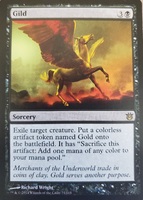
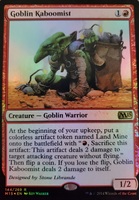
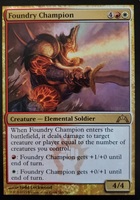
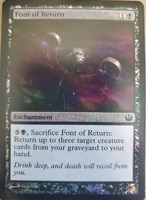
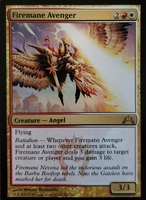
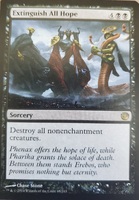
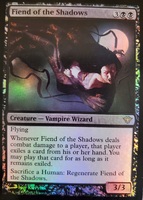
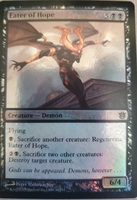
(Example Cards from Cecilia Ward's Magic the Gathering Card Collection. Note: All cards featured in this Digital Project are considered Rare, Ultra Rare, Foiled, or otherwise structurally interesting compared to typical Magic: the Gathering Cards.)