Museum Preservation for Private Collectors
As written by John E. Simmons in his work on the history of museums, he wrote, “the concepts of collection and preserving are closely related because, for collections to be truly meaningful, they had to survive into the future,” (Simmons, 9). The act of collecting is just one step towards preservation, gathering objects with similarities and sorting them in various ways, like how many MTG players sort their card collections by color, rarity, type, or any number of categories that strikes their fancy. Preservation is also not a foreign concept for many MTG collectors. One can easily imagine players who house cards in sleeves to prevent excessive bending and wear during play. For more seasoned private collectors, storage boxes and binders are also means of preserving your cards against direct damage, but they are not foolproof (Librarian). Cards in sleeves, boxes, while prevented from light damage, are not exempt from humidity or heat damage, or even indirect water damage, as card sleeves only protect three edges of the card. For those wanting to preserve the likeness of their cards if something ever happens to the physical cards, there are digital archival methods.
As previously mentioned, there is an official MTG Archive, called Gatherer, but this archive is purposefully incomplete, as cards have been removed for racial and cultural insensitivity (Hall, “Racist Magic”). Even if the online collection were complete, there is no functionality that allows players to group cards together, make sets, or otherwise demarcate ownership of cards. Because of this, methods for digitally preserving MTG cards revolve around fan-created online archives. One prominent example of fan-create archives is MTG Collection Builder, a website that allows users with a free account to organize their decks, view and sort cards, analyze their collection’s worth, and unsurprisingly: shop for more cards through a partnership with second-hand card site, TCGPlayer (MTG Collection Builder). MTG Collection Builder is definitely a helpful tool, but there are a few concerns: it does not take into account the physical condition of your cards, websites are prone to failure, there is no obvious solution for backing up your collection’s data. While the Terms and Privacy clauses on the website state your data will not be sold, there is no guarantee that those clauses will not change in the future. Another concern is insuring your MTG collection. If you plan to assess the value of and insure your collection, MTG Collection Builder is not a legally binding appraiser.
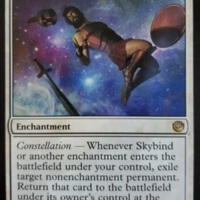
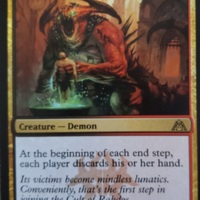
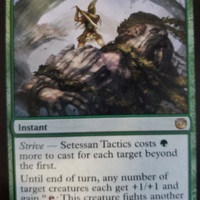
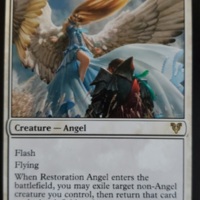
This project used Tropy and Omeka to digitize and display Cecilia Ward’s Magic the Gathering collection. Tropy is an open-source digital archive software. It allows the user to upload images, categorize the images, and add metadata, tags, and transcriptions. Omeka is an open-source modular publishing platform that allows users to share digital collections and exhibits. While Tropy is generally useful for collectors, Omeka is only recommended for private collectors who want to showcase their collection online and are a bit tech-savvy.
Tropy does not have a lot of MTG specific functionality of fan-made collection sites, but there are a few positives to how Tropy functions that benefit collectors. The software is highly customizable. You can add personalized tags, transcriptions, and notes to each card. With a little creativity, these tags can allow you to add cards to tags for decks to have virtual decks, while also seeing your complete collection. Tropy can also be easily backed up. With the CSV plugin, you can export your card collection to a CSV (comma separated value) file, which can easily be viewed and edited on a spreadsheet software with only a slight learning curve. This means you can regularly back up your collection. In addition, since all cards must be manually added, you will have pictures of the condition of your cards included, which can show card damage or foiling if needed for appraisal or insurance purposes. In addition, digitization can be helpful for all sorts of personal collections, whether you collect MTG cards, independent art pieces, vintage clothes, family heirlooms, coins, stamps, or more. If you can take high quality photos and upload them to a digital archive: you’ve got the startings of a digital collection (of course, you may also want to add descriptions, tags, and metadata for your items, but that can come with time).
Digitizing private collections is not just helpful to the collector, but could also have many benefits to field professionals: art historians who wish to study the card art of certain MTG cards, or cards by certain artists; statisticians who wish to look at how cards are distributed among players; economists who wish to examine the value of niche geek collections; and Museologists who wish to study all sorts of history about the cards and potentially use cards as parts of museum exhibits.
One last thing to remember: If you love something and hope it is remembered through the annals of time, it’s best chance is to be stored safely and documented properly. If you create a digital copy, it may become lost on the web, but lost is not irretrievable. If the physical cards are damaged, your digital collection will remind future generations that Magic existed, even if it was just a card game.