History of Collection Hobbies
Collection Hobbies have existed for a long time, and they are not unique to geek culture and games like MTG. Jerome De Groot, in his book, Consuming History: Historians and Heritage in Contemporary Popular Culture, writes “‘Collecting’ is key to people’s sense of self-identification and a massive phenomenon; it has been calculated that around 25-30 per cent of adults in the West identify themselves as ‘collectiors,’”(Groot, 287). Similarly, John E. Simmons wrote, “collecting is a deeply ingrained human trait related to the way humans use objects to navigate their way through the world,” (Simmons, 2) These quotes show the nature of collecting as something that gives individuals a purpose, and that collection is not nearly as niche as many believe, though individual types of collectors, such as MTG collectors, may be more niche than others.
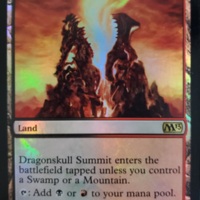
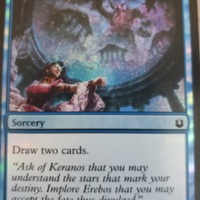
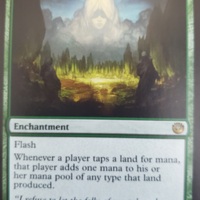
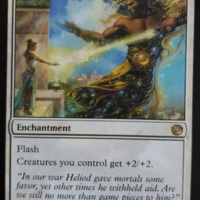
Later in the same chapter, De Groot wrote, “We can use crude figures about collection to suggest that contemporary culture is obsessed with order, completeness, and the arrangement of commodities that have value only in relation to each other,” (Groot, 287). This quote, while originally in the context of collecting antiques and artifacts, sounds like it’s perfectly explaining MTG cards. For instance, the value of a card is not inherent. The rarity symbols on the right of the card only give a clue to those who already have a frame of reference for MTG. Though there is no Black Lotus in Cecilia Ward’s collection, it is not actually an item of value, despite MTG collectors deeming it so. To an individual unfamiliar with MTG, they would not associate the card with being worth half-a-million dollars, after all, it’s just printed card stock, (Hall, “Magic”).
WOTC also helps facilitate MTG collections by providing collectors with a free online tool called The Gatherer, which allows collectors to search through a database of all approved cards to find information about the cards. Besides the fact that it’s a WOTC sanctioned service, it’s fairly bare bones, there’s no functionality for adding cards to a digital collection, creating decks, or making card wish lists. All in all, it’s less of a collection manager, and more of just an archive of what approved cards exist.